
Are you ready to redefine your financial future and build lasting wealth? The world of investing is constantly evolving, and what worked yesterday might not be the most potent strategy for tomorrow. As we look towards 2026, a powerful shift is underway, making Alternative Assets Private Markets not just an option, but a vital component for those serious about accelerating their financial freedom.
At Billionmode, we believe in empowering you with the knowledge and tools to navigate these exciting frontiers. This comprehensive guide will illuminate the landscape of private markets and alternative investments, showing you why they’re poised for significant growth and how you can strategically position yourself to benefit. Forget generic advice; we’re diving deep into actionable strategies that can transform your portfolio and help you achieve the impactful life you envision.
The Evolving Landscape of Wealth: Why Traditional Investing Isn’t Enough Anymore
For decades, the average investor’s playbook revolved around publicly traded stocks and bonds. While these remain foundational, the truth is, their growth potential can often be capped, and their volatility can be a source of stress. Public markets are efficient, yes, but that efficiency can also mean that opportunities for outsized returns are quickly arbitraged away.
The Limitations of Public Markets
Public markets, by their very nature, expose investors to daily fluctuations driven by news cycles, geopolitical events, and broad economic sentiment. While essential for liquidity, this constant scrutiny can make long-term planning challenging and often leads to emotional investment decisions. Furthermore, many innovative companies are choosing to stay private longer, deferring or even entirely avoiding public listings, meaning significant growth phases occur before they’re accessible to the typical stock market investor.
The Rise of Private Markets and Illiquid Assets
Enter private markets. This universe of investments operates outside traditional stock exchanges, offering access to private companies, real estate, infrastructure, and more. These investments are often less correlated with public markets, providing a powerful diversification tool. They also offer the potential for higher returns, as investors are often compensated for the illiquidity and longer holding periods. The landscape of Alternative Assets Private Markets is no longer just for institutional giants; it’s becoming increasingly accessible for sophisticated individual investors looking to build substantial wealth.
What Are Alternative Assets and Private Markets?
Before we delve into strategies, let’s clarify what we mean by these terms. Understanding the components of Alternative Assets Private Markets is the first step towards harnessing their power.
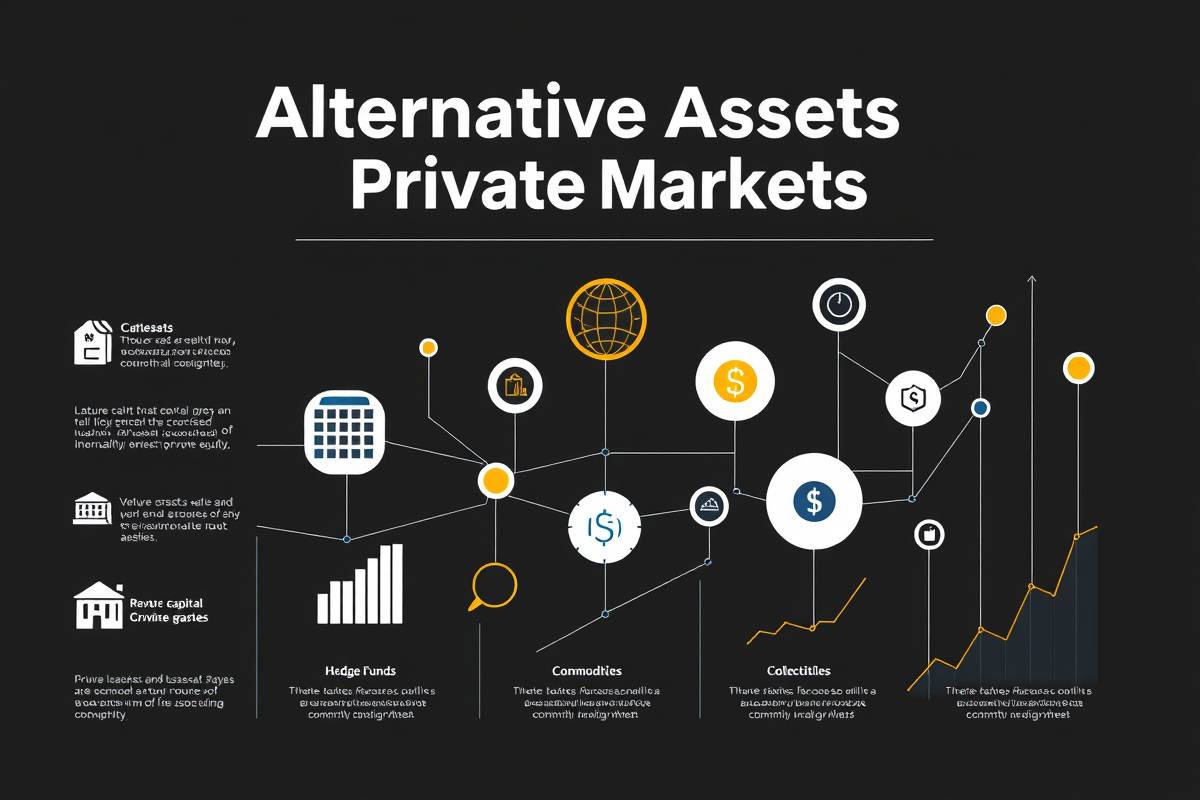
- Alternative Assets (Alts): These are investments that fall outside the traditional categories of publicly traded stocks, bonds, and cash. They encompass a vast range, including:
- Private Equity (PE) and Venture Capital (VC): Investing in private companies, from early-stage startups to mature businesses not listed on a public exchange.
- Real Estate: Commercial properties, residential developments, real estate funds, or even fractional ownership in specific properties.
- Hedge Funds: Pooled funds that employ diverse strategies to generate returns, often using leverage and complex financial instruments.
- Infrastructure: Investments in essential public systems like roads, bridges, utilities, and energy projects.
- Commodities: Raw materials such as gold, oil, and agricultural products.
- Collectibles: Art, rare wines, classic cars, and other unique items with intrinsic value.
- Private Markets: This refers to the ecosystem where these alternative assets are bought and sold directly, without the intermediation of public exchanges. It’s where deals are structured privately between investors and asset owners or companies.
These investments offer the chance for true diversification and often have a lower correlation to public market swings, potentially smoothing out your overall portfolio performance and enhancing long-term returns. For a deeper dive into the specifics, Investopedia provides an excellent overview of alternative investments.
Why 2026 is the Pivotal Year for Alternative Assets Private Markets Investing
The convergence of several factors makes 2026 a significant year for focusing on Alternative Assets Private Markets:
- Maturing Private Companies: Many companies that chose to stay private over the last decade are now reaching significant valuations, offering substantial opportunities for private equity and venture capital investors.
- Inflationary Pressures & Interest Rates: In an environment of fluctuating inflation and interest rates, alternative assets, particularly those linked to real assets like real estate and infrastructure, can offer a hedge and more stable returns than traditional fixed income.
- Technological Advancements: New platforms and financial innovations are making private market opportunities more accessible to individual investors, breaking down barriers that once limited these investments to institutions.
- Quest for Alpha: As traditional markets become more efficient and competitive, investors are increasingly looking to private markets for ‘alpha’ – returns generated above what the market provides.
- Shifting Investor Sentiment: There’s a growing recognition among savvy investors that a truly diversified portfolio must extend beyond public equities and bonds.
This confluence creates a unique window for those ready to explore these richer avenues for wealth creation.
Practical Strategies for Navigating Alternative Assets Private Markets
While the potential is significant, navigating private markets requires a thoughtful approach. Here’s how to strategize effectively:
Understanding the Risks and Rewards
Alternative Assets Private Markets come with unique characteristics. They are typically illiquid, meaning your capital might be locked up for several years. Valuation can be more complex, and due diligence is paramount. However, the reward often lies in uncorrelated returns, the potential for higher growth, and access to unique opportunities not available on public exchanges. Always assess the risk-reward profile against your personal financial goals.
Diversification Beyond Stocks and Bonds
The core benefit of alternative assets is true diversification. By adding uncorrelated assets to your portfolio, you can potentially reduce overall volatility and enhance returns. This isn’t about replacing your traditional holdings but complementing them. Think about how a mix of private equity, income-generating real estate, and a small allocation to venture capital can strengthen your overall life design and financial resilience.
Accessing Exclusive Opportunities
Historically, private markets were the domain of institutions and ultra-high-net-worth individuals. Today, that’s changing. Platforms offering fractional ownership in real estate, private equity funds, and venture capital syndicates are making these opportunities more accessible. This democratization is a key reason why 2026 is so promising for individual investors.
The Role of Due Diligence
Because private markets are less regulated and often less transparent, thorough due diligence is non-negotiable. This means scrutinizing the investment thesis, the management team, financial projections, and exit strategies. Don’t rush into any deal. Patience and careful research are your best allies. This is where your money mindset truly comes into play – disciplined research over impulsive decisions.
Building Your Wealth with Private Market Investments: Actionable Steps
Ready to embark on this exciting journey? Here are actionable steps to integrate Alternative Assets Private Markets into your wealth-building strategy:
- Educate Yourself Continuously: The first step in any successful investment journey is knowledge. Explore resources, read market analyses, and understand the nuances of each alternative asset class. Start your journey with our Start Here guide and continue learning with Billionmode’s insights.
- Assess Your Risk Tolerance and Goals: Private market investments often require a longer time horizon and comfort with illiquidity. Clearly define your financial goals, timelines, and comfort level with risk. This clarity is crucial for effective wealth building.
- Explore Various Alternative Asset Classes: Don’t put all your eggs in one alternative basket. Research different sectors like real estate, private debt, or venture capital to see which aligns best with your interests and risk profile.
- Consider Diversification Strategies: Even within alternative assets, diversification is key. Instead of one large investment, consider several smaller allocations across different asset types or geographies.
- Leverage Technology and Expert Guidance: Modern platforms are democratizing access to private markets. Also, consider consulting with financial advisors who specialize in alternative investments. They can provide tailored advice and help navigate complex deals. Explore how AI automation and digital income strategies can complement your private market ventures.
Future-Proofing Your Portfolio: Beyond 2026
The move into Alternative Assets Private Markets isn’t just about capitalizing on 2026; it’s about building a resilient, future-proof portfolio. The trends driving the growth of private markets are long-term, suggesting that these investment avenues will continue to offer compelling opportunities for years to come. Staying informed, adapting to new market conditions, and continuously refining your strategy will be paramount. Keep an eye on our Billionmode blog for the latest insights and trends.
Ready to Transform Your Financial Future?
Unlock exclusive insights and strategies for navigating complex markets, building multiple income streams, and designing a life of freedom and impact. Join the Billionmode community today and get direct access to cutting-edge wealth-building tools and personalized guidance.
Embracing Alternative Assets Private Markets is a strategic move towards greater financial autonomy and diversification. By understanding the landscape, applying diligent research, and leveraging new access points, you can position yourself to capture significant wealth in 2026 and beyond. This isn’t just about making money; it’s about building the financial foundation for a life of purpose and impact, aligned with the Billionmode vision.
Frequently Asked Questions About Alternative Assets and Private Markets
What exactly are Alternative Assets?
Alternative Assets are investments outside of traditional publicly traded stocks, bonds, and cash. They include a diverse range of opportunities like private equity, venture capital, real estate, hedge funds, commodities, infrastructure, and even collectibles or art. These investments often offer diversification benefits and the potential for higher returns, though they typically come with higher illiquidity and specific risks.
Why are Private Markets becoming more important for investors in 2026?
Private Markets offer access to early-stage growth companies, established private businesses, and unique real estate or infrastructure projects before or instead of them ever going public. In 2026, with evolving market dynamics, investors are increasingly looking to private markets for uncorrelated returns, higher potential growth, and diversification away from volatile public exchanges, seeking to capitalize on opportunities often unavailable to the average retail investor until now.
How can I start investing in Alternative Assets and Private Markets?
Starting in Alternative Assets Private Markets requires education and strategic planning. Begin by understanding different asset classes, assessing your risk tolerance, and setting clear financial goals. While historically exclusive, new platforms and regulations are making some private market opportunities more accessible. Consider consulting with a financial advisor specializing in alternative investments or exploring reputable fractional ownership and crowdfunding platforms to gain exposure.